The Origin & Regional Context
Located along the rushing waters of the Sutlej River in the lower Himachal hills, the state of Kahlur (later known as Bilaspur) developed one of the earliest and most original schools of Pahari miniature painting. Established in the mid-17th century, Bilaspur maintained an artistic voice distinct from the later Kangra style.
Under rulers like Raja Dip Chand (r. 1653-1665) and Raja Ajmer Chand (r. 1712-1741), Bilaspur painters developed a robust, earthy visual idiom. While later mountain ateliers were dominated by the refined Guler style, early Bilaspur maintained an austere, archaic strength. The court’s close proximity to the river shaped its visual imagination: in Bilaspur, the Yamuna of Braj was painted with the wide, rocky currents and forested embankments of the Sutlej River, turning the sacred childhood of Krishna into an immediate, physical reality for the hill people.
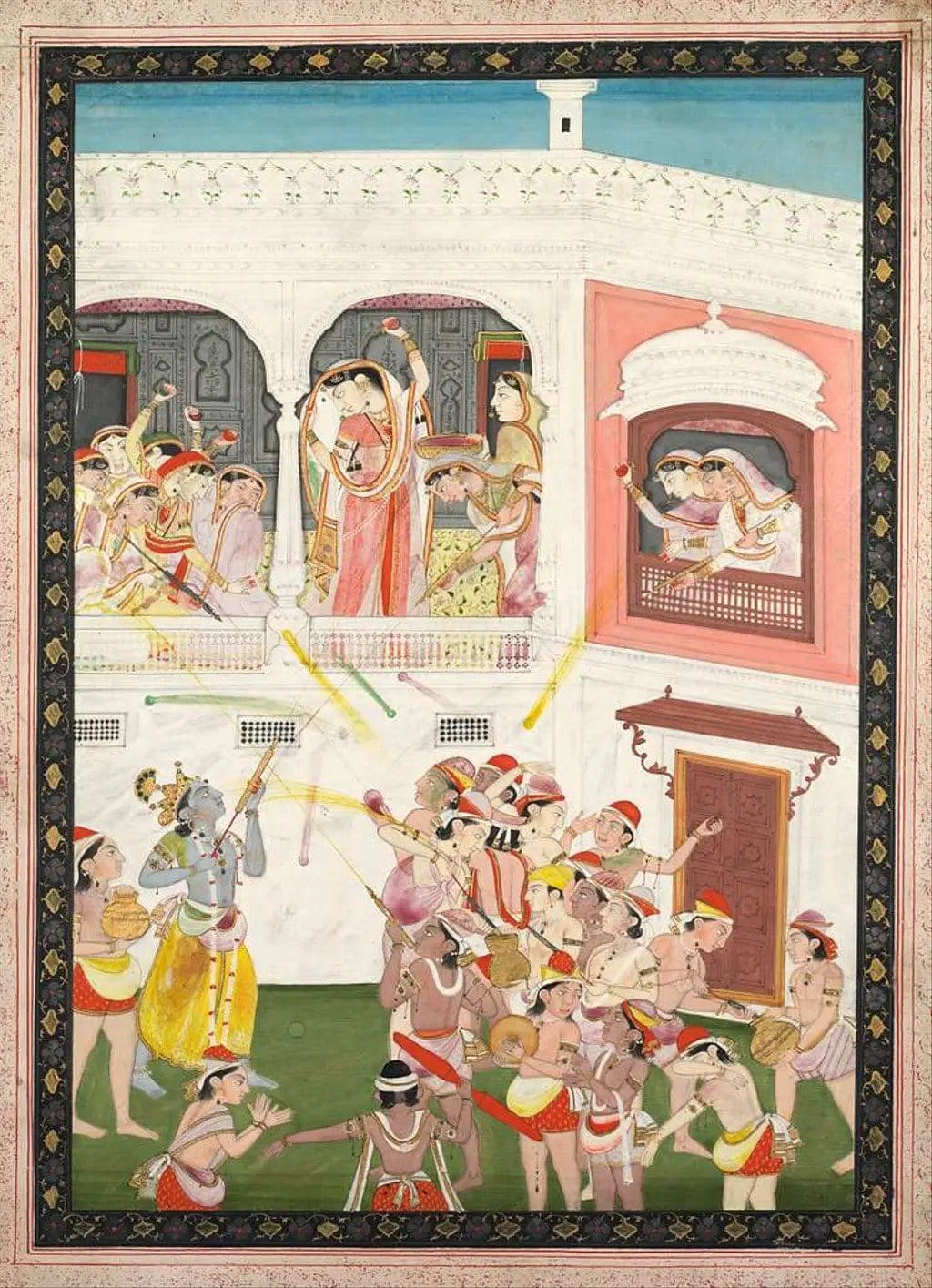
Visual Grammar & Iconography
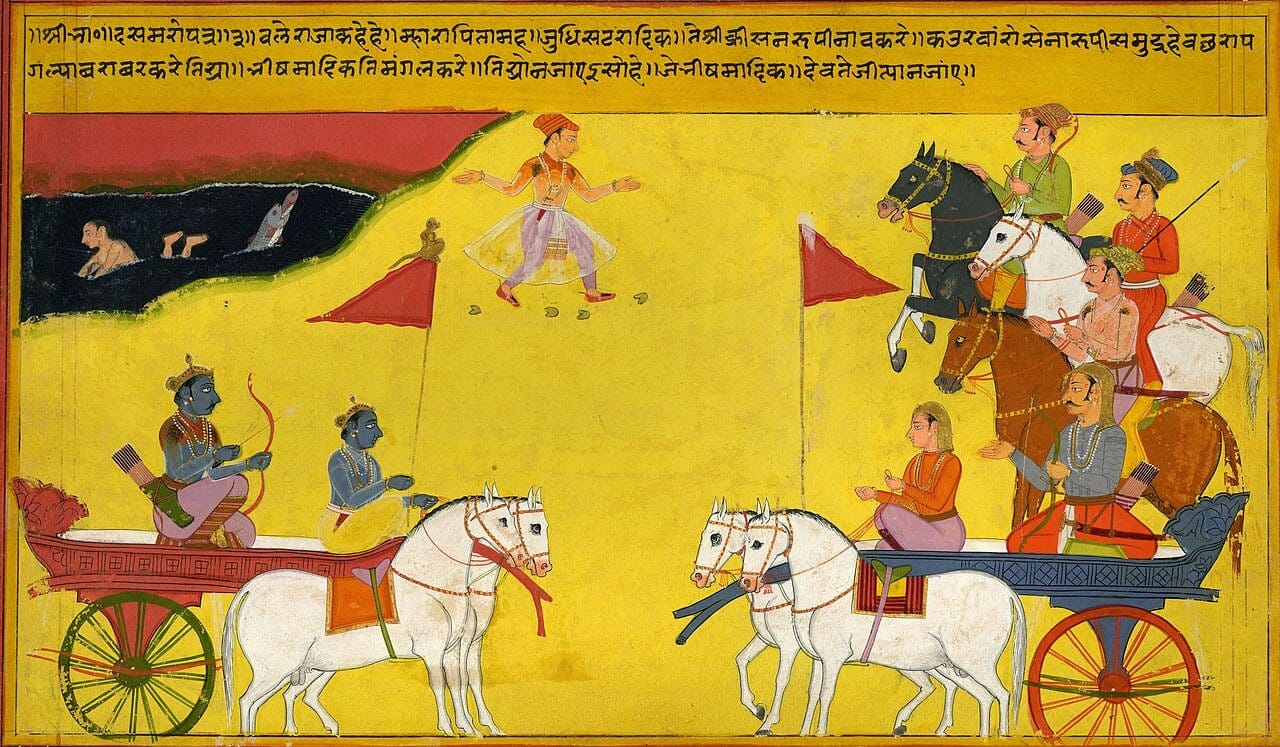
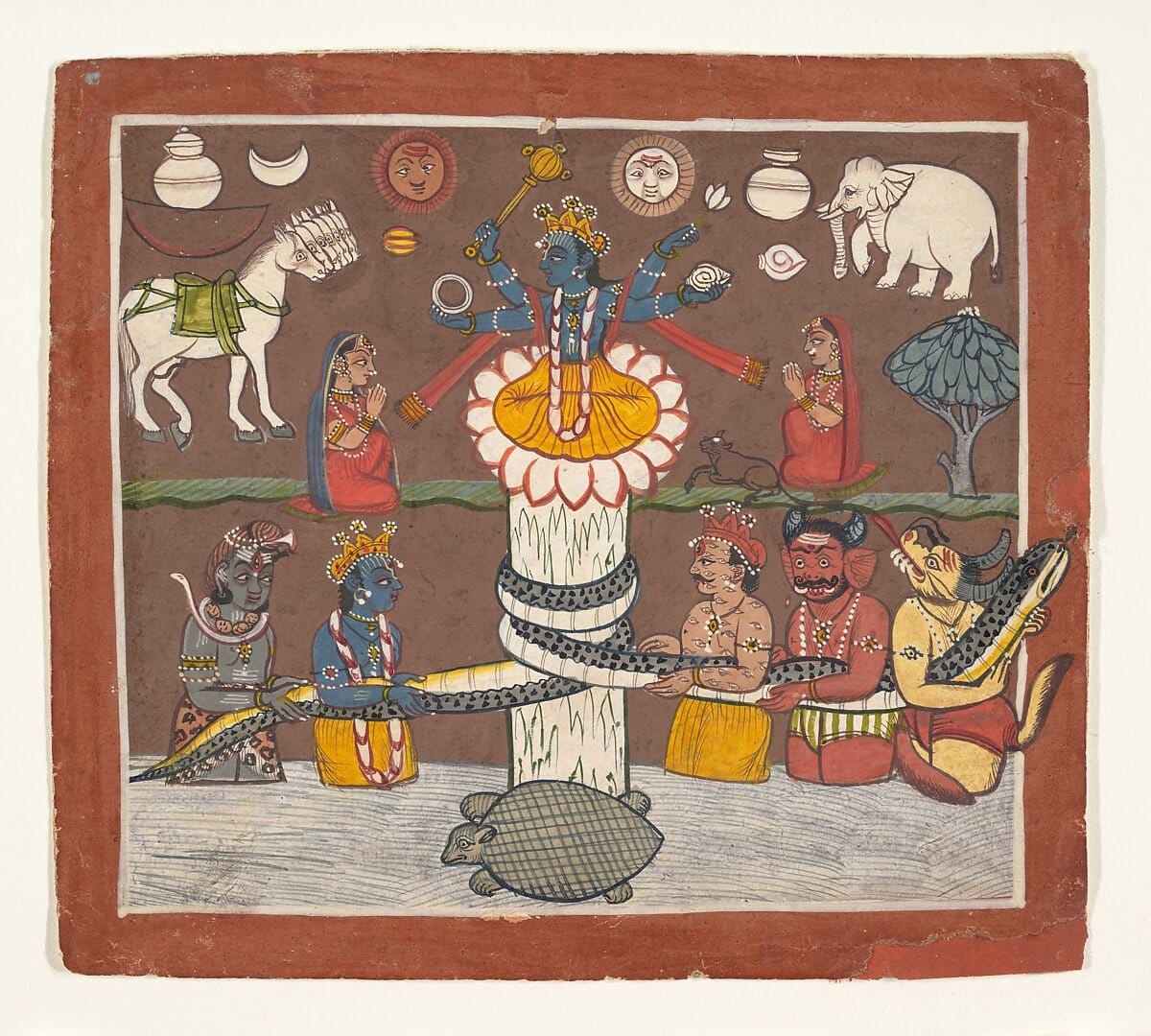
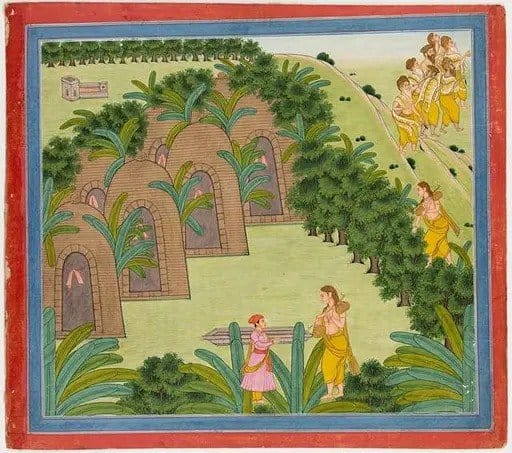
Bilaspur painting is characterized by deep, saturated grounds, square physical proportions, and expansive skies:
- The Robust Figure: Characters possess a sturdy, grounded presence. Heads are slightly large, with full rounded cheeks, prominent noses, and large expressive eyes that convey unpretentious devotion.
- The Deep, Sloping Horizon: Landscapes feature high, sweeping horizons often painted in dark charcoal gray, slate blue, or rich chocolate brown, throwing the bright colors of the figures into sharp, luminous contrast.
- The Riverine Focus: Water is a recurring compositional anchor. Swirling gray-blue rivers with white foam patterns, floating lotuses, and nesting waterbirds run across the lower registers of the folios.
- Saturated Primary Blocks: Early Bilaspur artists favored strong fields of unmixed pigment: warm mustard yellow, burning lacquer red, and deep forest green, creating a bold decorative weight.
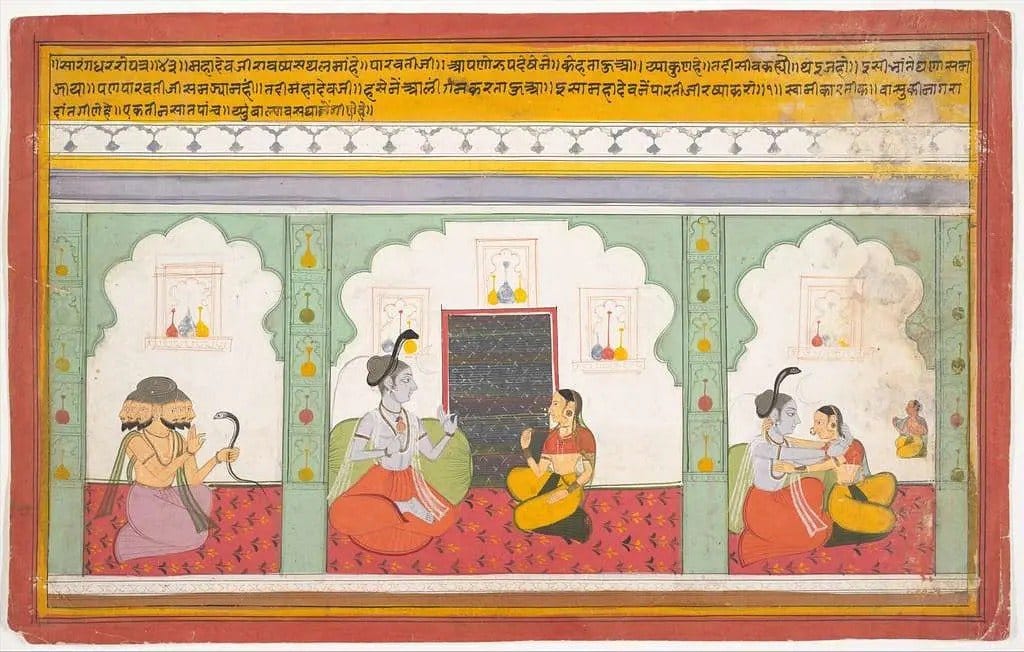
Material Anatomy & Process
The workshop craft of Bilaspur was built upon durable mineral chemistry:
- Heavy Local Rag Paper: Artists layered indigenous paper made from mountain wild fibres, sized with rice paste and burnished face down with agate stones until firm and glossy.
- Opaque Mineral Tempera: Pigments were applied thickly:
- Red: Dense cinnabar (hingul) and red oxide for garments and canopies.
- Yellow: Earthy peori clay and raw orpiment (haritala).
- Blue: Coarse indigo and lapis lazuli for Krishna's dark complexion and nocturnal skies.
- White: Calcined conch shells and lead white, used with heavy opacity for garments and foam lines.
The Literary & Spiritual Roots
Bilaspur painters drew heavily upon the core texts of the northern Vaishnava movement:
- The Bhagavata Purana: The atelier produced several complete illustrated suites of the Tenth Book, focusing on the rustic games of the cowherds, the stealing of butter, and the pastoral warmth of Gokula.
- The Rasamanjari of Bhanudatta: Early Bilaspur folios illustrated classical Sanskrit classifications of romantic heroes and heroines, grounding divine love in strict poetic theory.
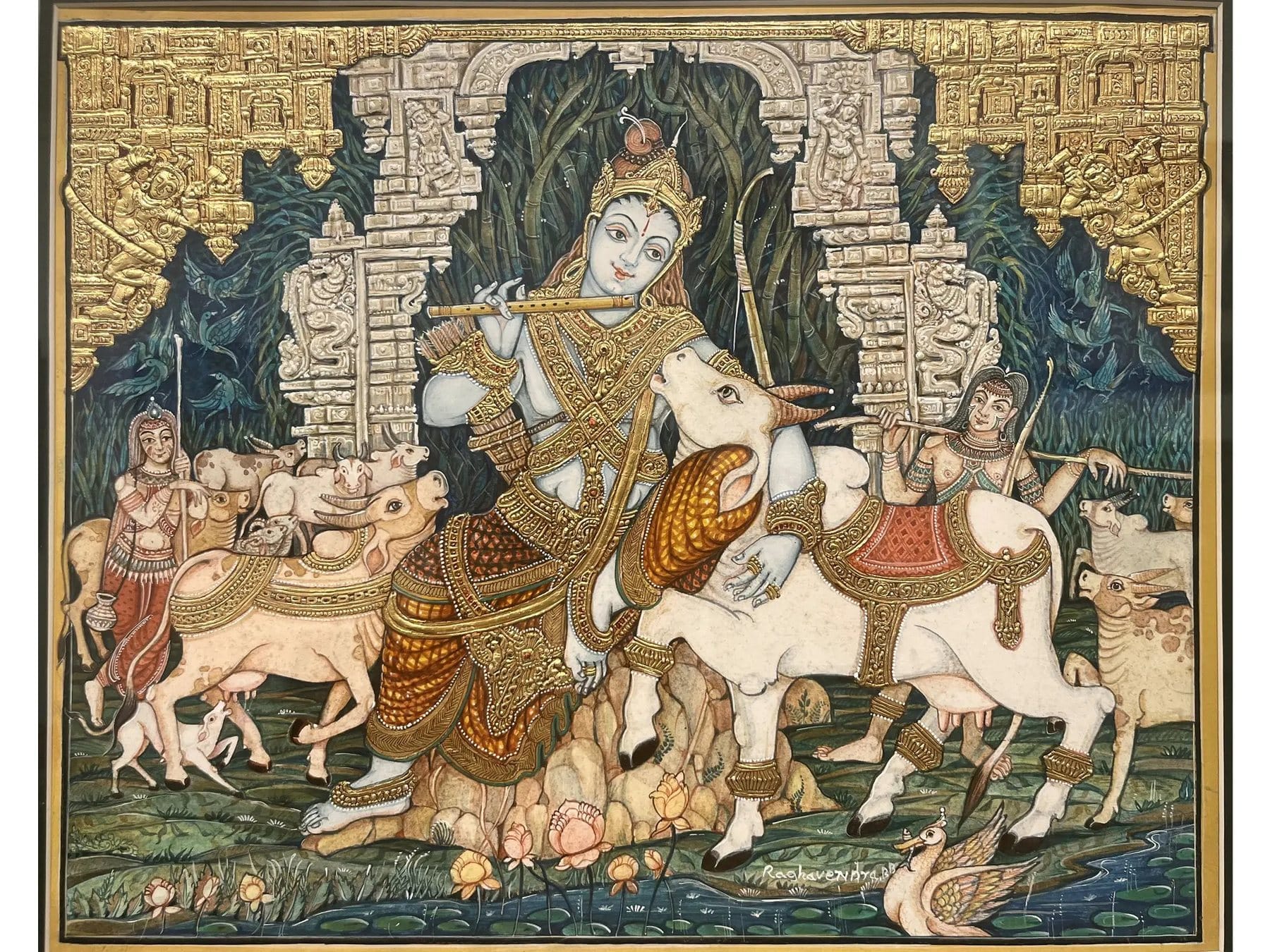
- The Sakhya Rasa (Devotion through Friendship): A notable feature of Bilaspur is the celebration of Krishna’s companions (the Sakhas). The cowherds are painted with individual humor, affection, and loyalty, capturing the pure joy of pastoral fellowship.
Heritage, Lineage & Field Notes
- The Migrant Guilds: Bilaspur’s early ateliers were staffed by artists who had migrated from Rajasthan and the Mughal workshops, later fusing with local hill painter families.
- Dispersal of the Kahlur Collection: The historic royal collection was largely dispersed in the 20th century following the submergence of Old Bilaspur town under the waters of the Govind Sagar reservoir.
- Key Archival Repositories
- National Museum, New Delhi: Major collection of early Bilaspur Bhagavata and court folios.
- Victoria and Albert Museum, London: Outstanding 17th-century Bilaspur leaves.
- Government Museum and Art Gallery, Chandigarh: Key holdings of early Kahlur painting.
In Bilaspur, the sacred stories were not kept behind temple curtains. They were brought to the water’s edge, showing Krishna walking the stony banks of the river with the companions of his youth.