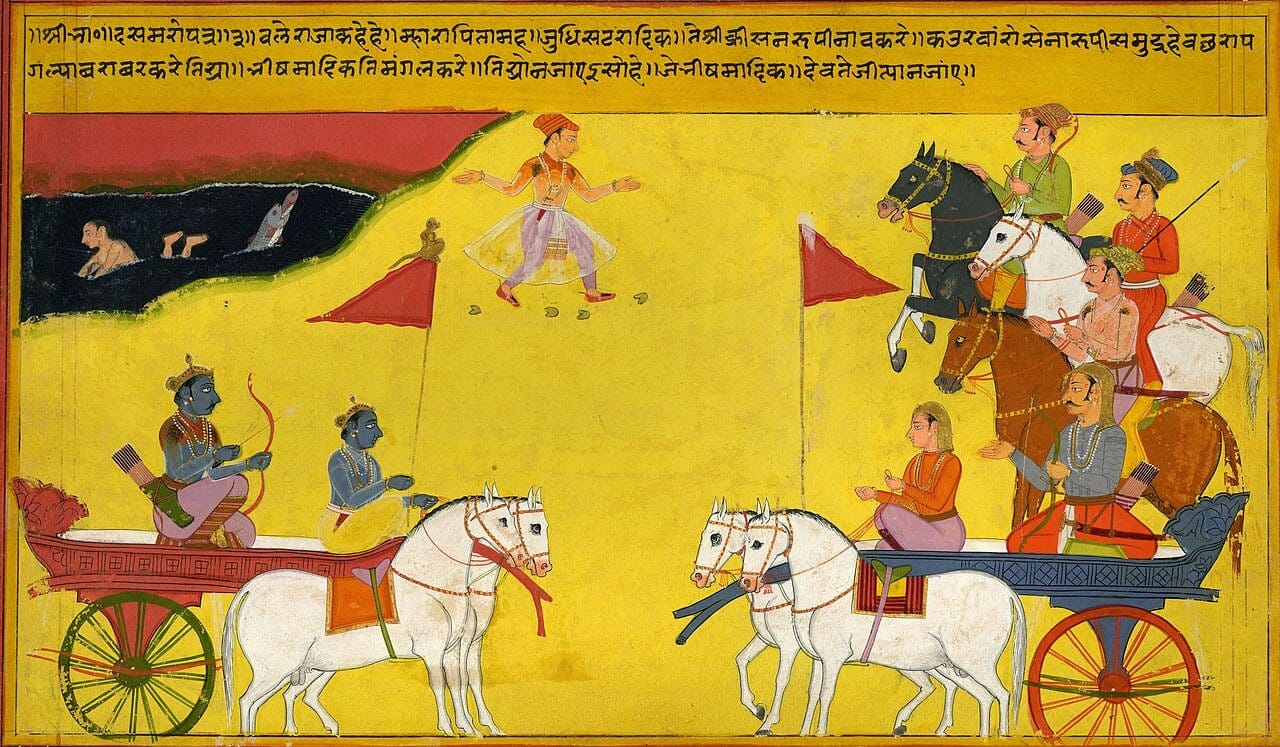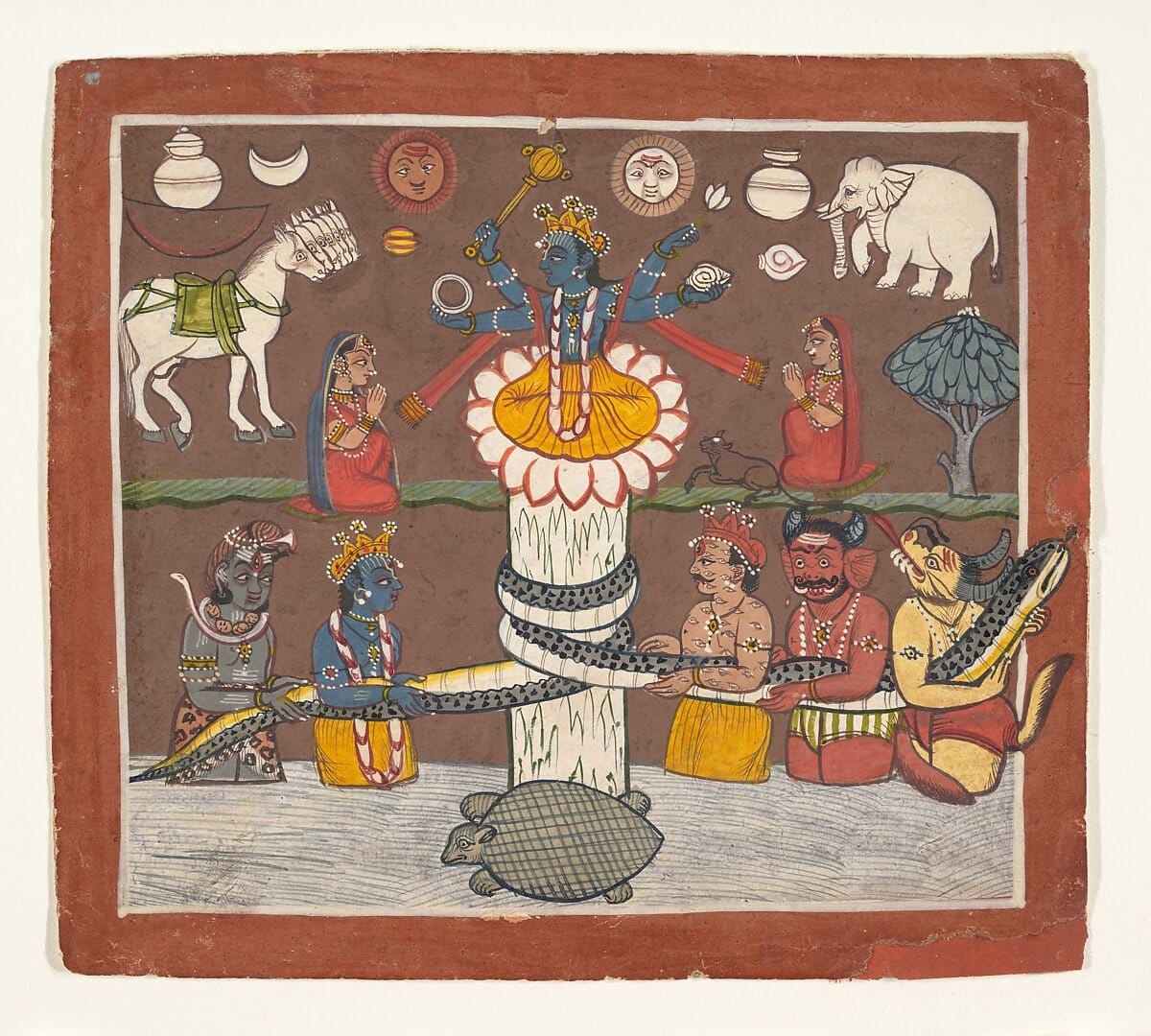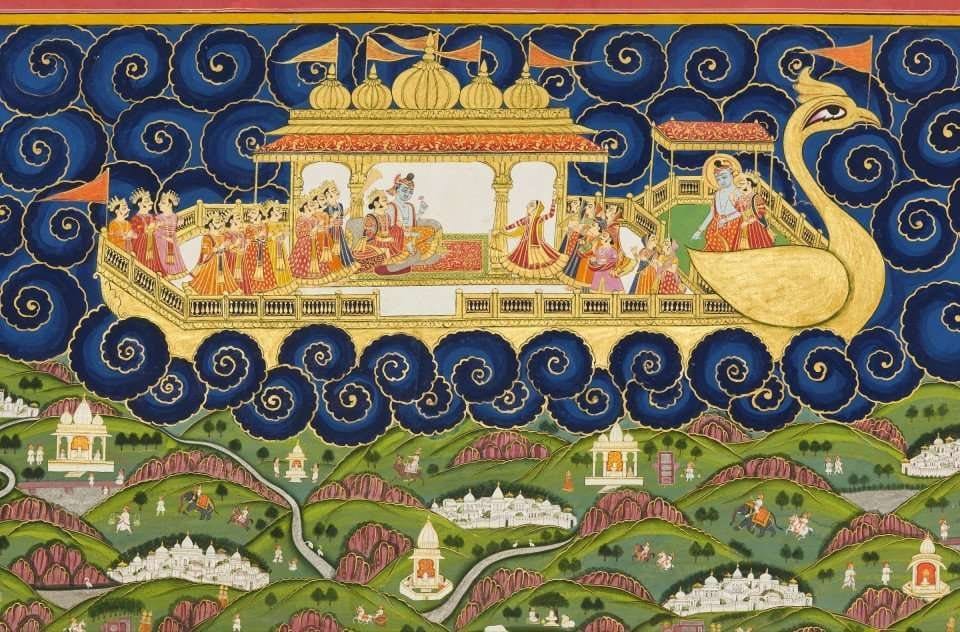
The Origin & Regional Context
Following the fall of the Vijayanagara Empire in 1565, master painters and guild artisans migrated south to find shelter under the patronage of the Wodeyar dynasty at Mysore. Under Raja Wodeyar I (r. 1578-1617) and later rulers, this transplanted Vijayanagara tradition was refined into a distinct, courtly idiom: Mysore Traditional Painting.
The school reached its creative peak in the early 19th century during the reign of Maharaja Krishnaraja Wodeyar III (1794-1868), a passionate patron of literature, music, and painting. While neighboring Tanjore painting across the border in Tamil Nadu developed bold, heavy relief packed with cut glass stones, Mysore followed an aesthetic of aristocratic restraint. Here, sacred icons were painted on fine paper mounted on wooden boards, combining soft, flowing draftsmanship with paper-thin gold relief. In the palaces and shrines of Mysore, Braj was reimagined not through rustic folk songs, but as a regal, golden sanctuary of serenity and grace.
Visual Grammar & Iconography
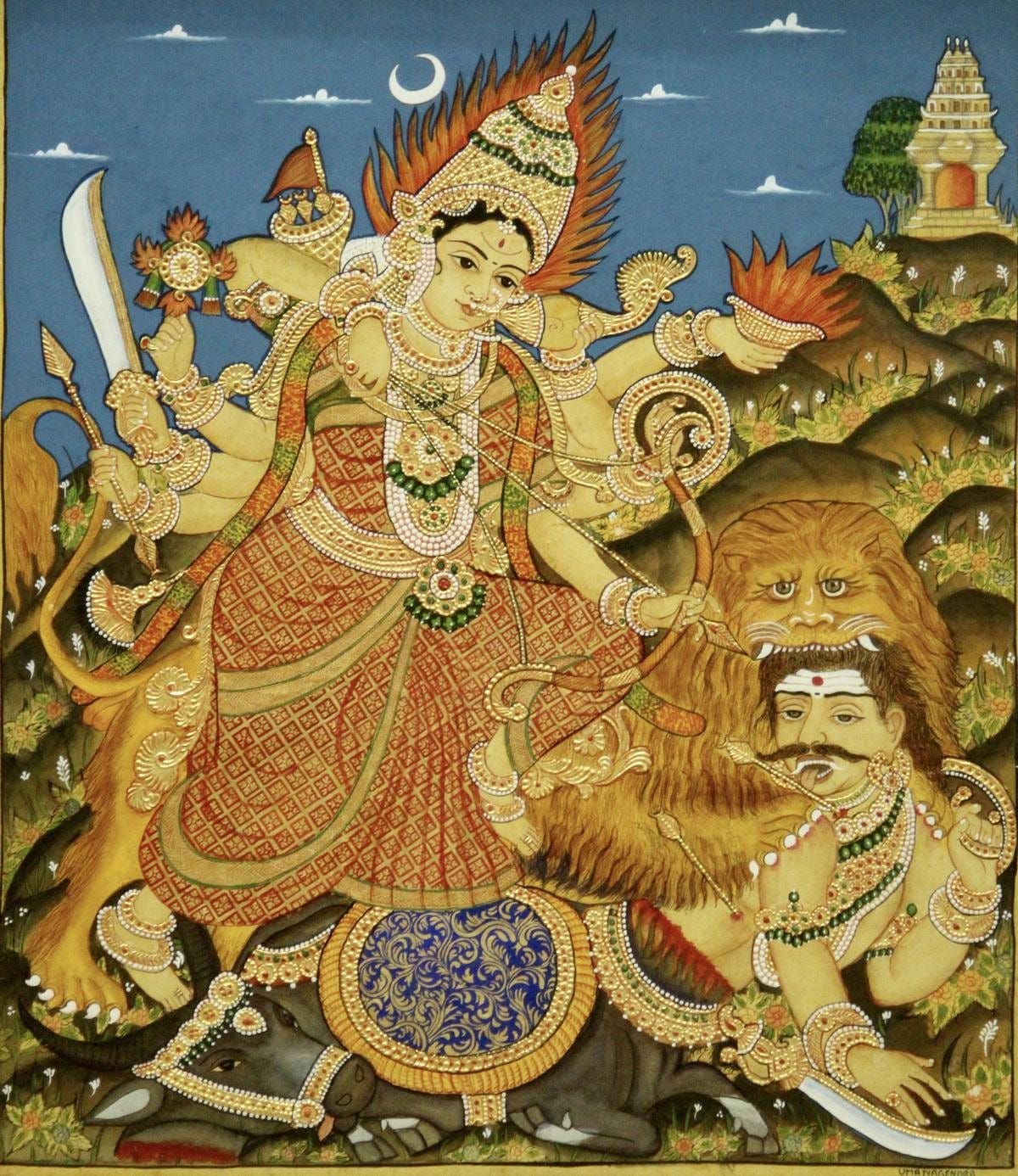
Mysore painting is characterized by its aristocratic poise, muted color harmony, and delicate relief work:
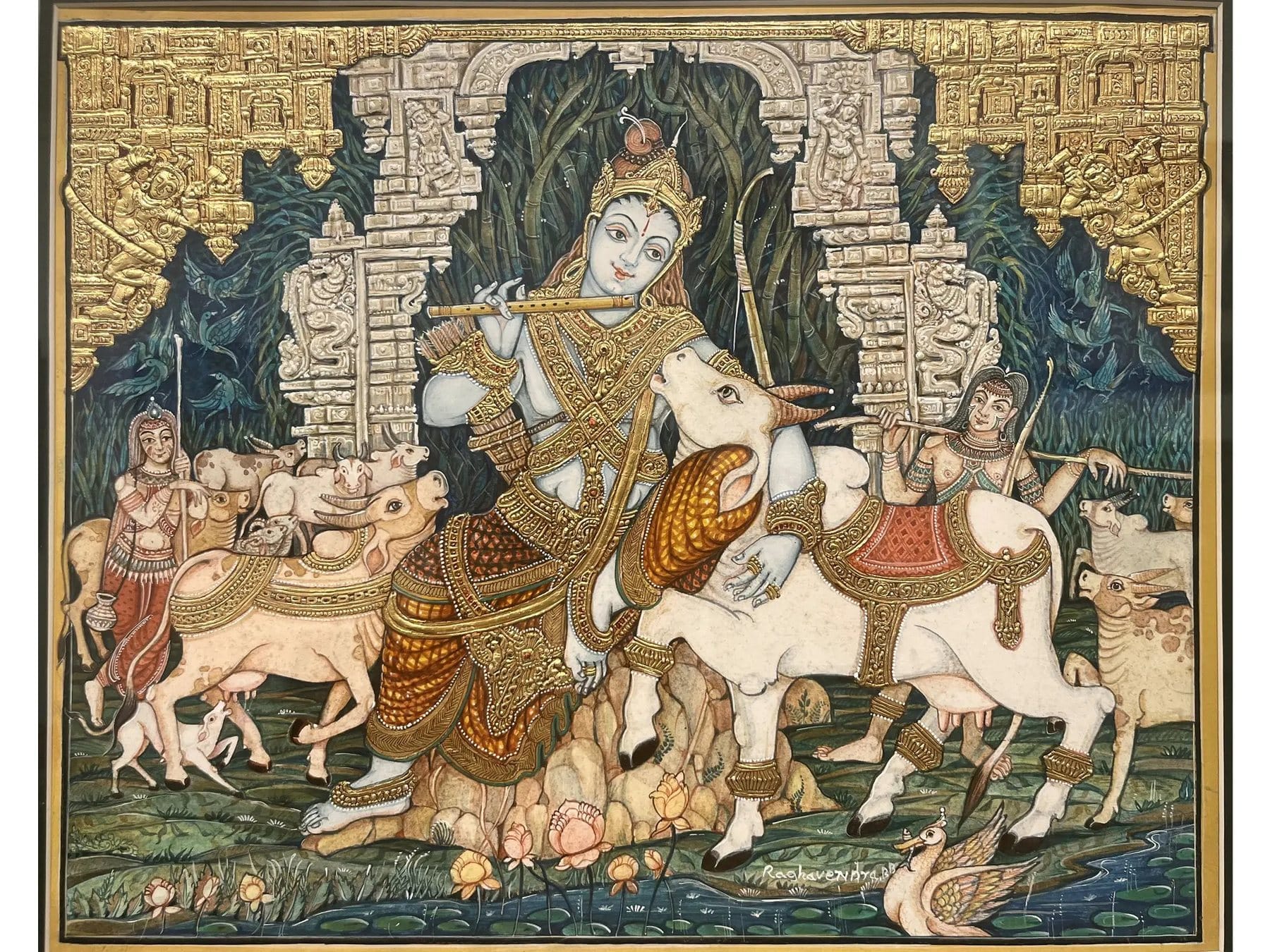
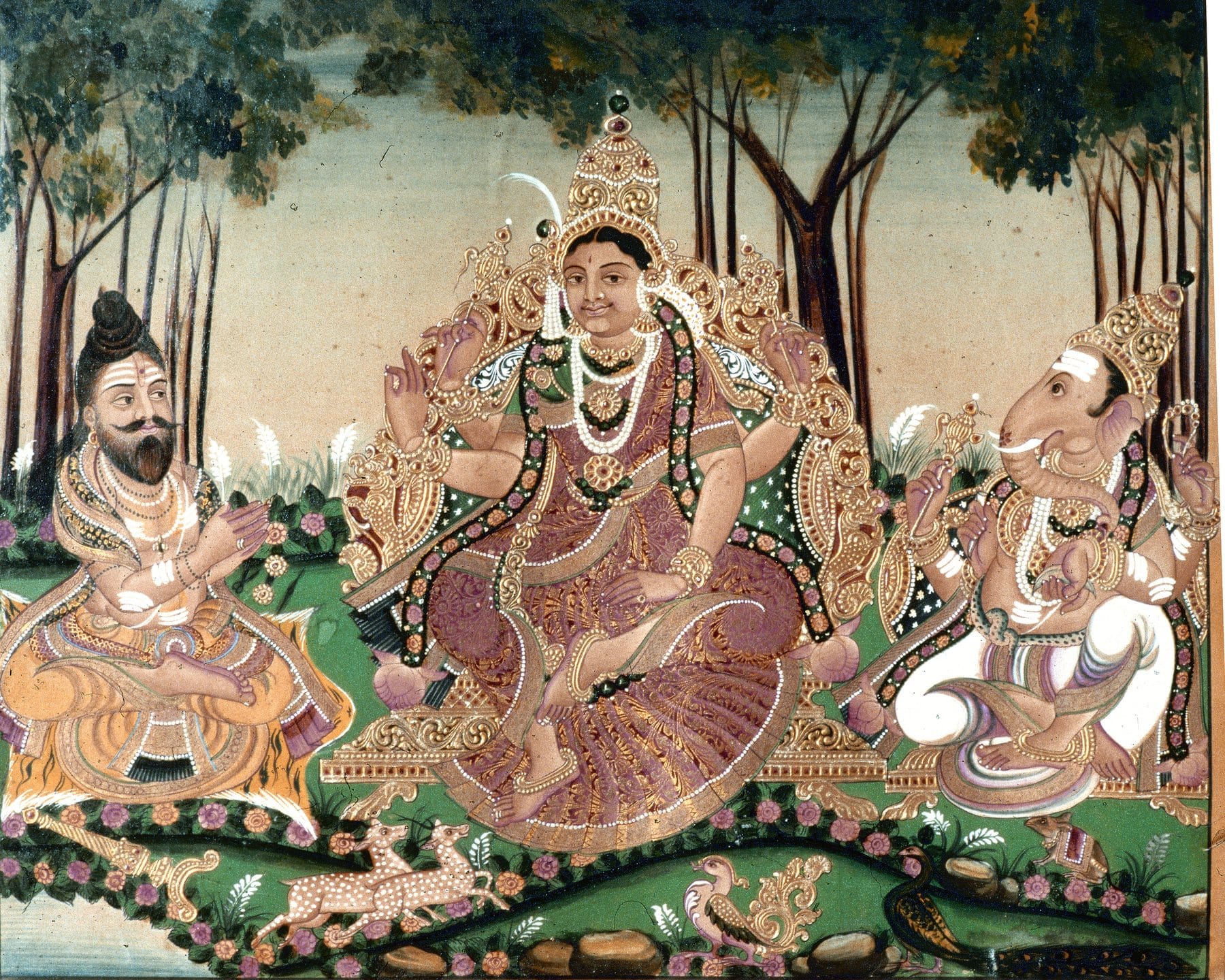
- Subtle Low-Relief Gesso (Makku Work): Unlike the thick, chunky gesso of Tanjore, Mysore uses Makku work: a very fine, low-relief paste that rises only slightly above the surface. This allows the crowns, jewels, and arches to catch the light without overwhelming the painter's brushwork.
- The Serene, Rounded Face: Deities feature gentle, rounded faces, broad foreheads, and calm, half-closed lotus eyes (padma-netra) reflecting deep meditative peace. Krishna is portrayed with a gentle, auspicious smile, devoid of violent tension or dramatic distortion.
- The Imperial Canopy and Pillars: Figures are enclosed beneath ornate architectural arches (prabhavali) supported by slender, fluted pillars, placing the viewer in the position of a devotee standing at the threshold of a royal temple sanctum.
- The Muted, Lyrical Palette: Mysore avoids jarring primary colors. The ground is laid in soft, harmonious washes of olive green, faded ochre, deep maroon, and dusky rose, against which pure gold leaf gleams with quiet nobility.
Material Anatomy & Process
The creation of an authentic Mysore panel is a meticulous multi-stage craft:
- The Prepared Support: Traditional artists work on handmade paper pasted onto wooden boards (usually jackfruit or teakwood), treated with a paste of fine white lead or zinc white mixed with gum arabic, then burnished with an agate stone until perfectly smooth.
- The Gesso Mixture (Makku): The low-relief paste is prepared by boiling white lead (safeda) or zinc oxide with gum arabic and chalk powder. The artist applies this paste using a fine brush, slowly building up necklaces, crowns, and pillars in delicate layers.
- Gold Leaf Application: Pure 24-carat gold foil is laid over the dried gesso relief and gently pressed into every contour. The gold is then burnished with an agate tipped stylus, giving the metal an unblemished, luminous luster that never tarnishes.
- Natural Mineral and Vegetal Dyes
- Blue: Natural indigo for Krishna's dark, auspicious skin.
- Yellow: Turmeric and yellow ochre for silken dhotis.
- Red: Pure mineral cinnabar and madder root.
- Green: Extracted from vegetable leaves and malachite stone.
The Literary & Spiritual Roots
Mysore painting was deeply influenced by the monumental cultural projects of Krishnaraja Wodeyar III:
- The Sritattvanidhi: The Maharaja personally commissioned and compiled the Sritattvanidhi (The Sacred Treasure of Realities), a monumental nine-part illustrated treatise documenting the iconography, meditation verses (dhyana slokas), and postures of Indian deities. This text provided the definitive blueprint for Mysore painters.
- The Child of Braj (Vatsalya Bhakti): Like Tanjore, Mysore devotion centered heavily on Navaneetha Krishna (the infant butter-thief) and Venugopala (the youth playing the flute). Approaching the supreme god as a beloved child allowed courtiers and householders to experience devotion as tender, protective affection.
- Radha and Krishna in the Courtly Grove: When Radha and Krishna are depicted together, they sit upon golden swings (jhoola) or beneath flowering Kadamba trees within palace courtyards, harmonizing the pastoral myths of Braj with the sophisticated court culture of Southern India.
Heritage, Lineage & Field Notes
- Hereditary Lineages: The art was preserved by traditional artisan communities known as Chitragars, who worked as royal court painters for generations.
- Geographical Indication (GI): Mysore Traditional Painting is protected under India’s Geographical Indications of Goods Act (Registered under Application No. 24 in 2006), ensuring the preservation of authentic gesso and gold leaf techniques against modern commercial screen-prints.
- Key Archival Repositories
- Jaganmohan Palace Art Gallery, Mysore: The premier royal collection of historical Mysore masterpieces.
- Karnataka Chitrakala Parishath, Bengaluru: Outstanding archival collection of traditional Mysore panels.
- National Museum, New Delhi: Master classical panels of Krishna themes.
In Mysore, gold was never used to shout of wealth. It was applied with restraint, capturing the quiet, eternal radiance of a god who sits peacefully in the shrine of the heart.